
“Cancer research is a global science and Yorkshire Cancer Research has helped place Yorkshire at the heart of this worldwide mission.” – Professor Blair's experience content
A passionate scientist and dedicated supporter of pioneering cancer research, Professor Eric Blair has dedicated much of his life to bringing vital progress to people in Yorkshire.

Now a Professor at Leeds University, he grew up in Edinburgh, where he graduated with a degree in biochemistry before moving to Warwick to complete his PhD in Biological Sciences.
He spent five years undertaking postdoctoral fellowships in Denmark and Sweden before returning to England for another fellowship at the National Institute for Medical Research (now the Francis Crick Institute) in London. It was here he developed a strong interest in viruses, particularly those which cause cancer.
In 1981, Eric moved to Leeds, which he has called home ever since. He was appointed a Lecturer in Biochemistry at the University of Leeds and rose to become Professor of Molecular and Cellular Biology in 2008.
Eric’s interest in human papillomavirus (HPV) deepened in the 1990s, after receiving funding from Yorkshire Cancer Research to investigate how HPV causes cervical cancer.
He said: "At the time, there were no vaccines or treatments for HPV, even though it was already well established that the virus was a major cause of cervical cancer.
Quote from Professor Eric Blair
HPV is found in more than 90% of cervical cancer cases, but the mechanisms behind how it caused the disease were still unclear at that time. Equipped with Yorkshire Cancer Research funding, my team and I set out to answer that question.”
Professor Blair and his team used new gene sequencing techniques to study cells containing HPV and how HPV can affect the body’s immune system, allowing cancer cells to form.
He said: “Understanding how the virus manipulates our immune system was crucial. Under normal circumstances, infected cells display tiny fragments of viral proteins on their surface, like warning flags, alerting immune cells to destroy them before they cause harm.
Eric’s team discovered that HPV interferes with this process, preventing HPV infected cells from displaying these “warning flags”. As a result, the immune system can’t recognise the infected cells, allowing HPV to remain hidden and unharmed, and giving it time to cause cancer.
This pioneering discovery by Eric and his team has helped pave the way for global advancements in cancer research. His work has opened new possibilities for developing cancer drugs and therapies that can block the mechanisms HPV uses to hide from the immune system. By making infected cells visible, they can be destroyed before cancer develops.
Eric continues his pioneering research today, focusing on developing ways to modify another group of viruses, the adenoviruses, so they can target and destroy cancer cells. He is also a passionate advocate for the HPV vaccine and its vital role in protecting women and men against HPV-related cancers such as cervical and throat cancer.
Quote from Professor Eric Blair
There is research happening worldwide into how we can make cancer cells more visible and interfere with the way the virus drives the formation of tumours. Alongside this, we now have a highly effective immunisation programme. The HPV vaccine, which protects against the four most common strains, is now available to both sexes. If everyone was vaccinated, we could control or even eliminate the virus.
I believe prevention is the most powerful tool we have in eradicating cancer as it saves lives before the disease can even begin.”
Beyond the laboratory, Eric’s connection to Yorkshire Cancer Research grew stronger in 1997, when he became the charity’s Scientific Secretary; an honorary role he held for 17 years.
During this time, he helped establish a Scientific Advisory Committee, working with cancer experts and researchers to help the charity review research funding applications and raise its profile across Yorkshire and beyond. The panel’s Chair was Professor Eddie Dawes, an eminent biochemist from the University of Hull and Eric’s greatest role model.
Eric said: “Being in Yorkshire, we made sure to choose research that offered the best value for money, where every pound could have the biggest possible impact on people with cancer. It was an honour to work alongside Eddie. He was a huge mentor to me throughout my time on the panel and his passion for research shone through every project we worked on. He sadly passed away a couple years ago, aged 97, but I will always look back on those years with such fondness.”
Throughout his time on the panel, Eric witnessed remarkable achievements from researchers supported by Yorkshire Cancer Research and the far-reaching impact of their pioneering work on people in Yorkshire and beyond.
He said: "I saw the charity support landmark projects including in Leeds, Sheffield, York and Bradford.
Quote from Professor Eric Blair
These collaborations led to major breakthroughs, including the development of the world’s first photodynamic therapy cancer drug by Professor Stan Brown in Leeds and the discovery of Lynparza by Professor Thomas Helleday and his team in Sheffield, a cancer drug saving thousands of lives worldwide. Cancer research is a global science and Yorkshire Cancer Research has helped place Yorkshire at the heart of this worldwide mission.”
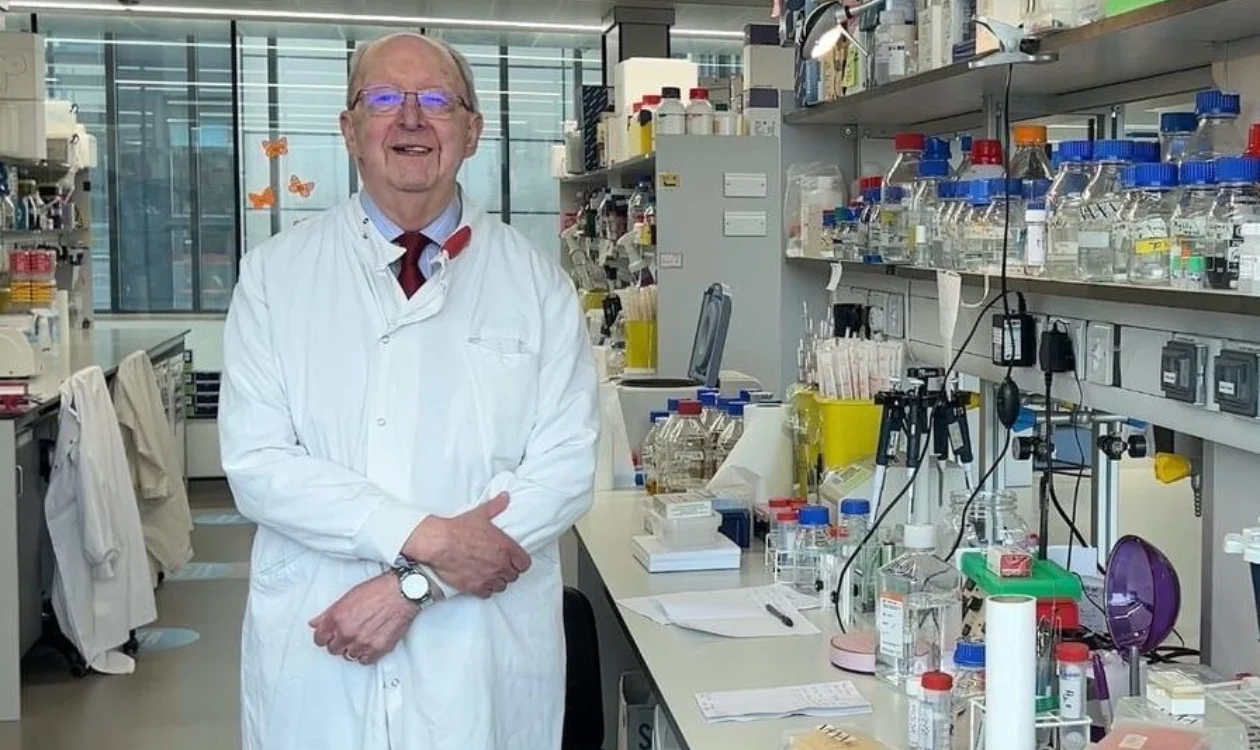
Eric’s commitment to cancer research in Yorkshire gained new significance in 2006 when he received his own cancer diagnosis.
“I was very active on the scientific advisory panel when I was diagnosed and treated for prostate cancer. It certainly gave a new meaning to my work and made me think more about the lives that could be saved through research.”
Thanks to early detection and surgery, Eric has now been cancer-free for 19 years.
“I was fortunate. Early diagnosis saved my life. Due to early detection, I was able to have surgery to remove the tumour and didn’t require any further treatment. Sadly, that’s not the case for everyone. I’ve seen too many scenarios where cancer is diagnosed much later, leaving fewer options for treatment.”
Eric finished his role on the panel in 2014, but his support for the work of Yorkshire Cancer Research lives on.
Quote from Professor Eric Blair
Yorkshire Cancer Research is funding fantastic work across all strands of cancer research - prevention, diagnosis and treatment. It’s also encouraging to see its commitment to supporting clinical research that can directly benefit people living with cancer or help prevent others from developing it in the future.”
When asked about the future of cancer research in Yorkshire, Eric said: “Researchers are always looking for cures, and we can’t lose sight of that here in Yorkshire. Finding cures is a vital strand of cancer research, but it doesn’t come cheaply or quickly. However, we are standing on the shoulders of those who came before us, and for that, I feel hopeful.”

"We need to give people a voice and bring them with us into the future of cancer research." – Darren’s experience

Darren Pattie from Poppleton is one of the first people to join the new Patient and Public Involvement and…
Poet Laureate pens new poem inspired by cancer experiences in Yorkshire

Poet Laureate Simon Armitage has penned a new poem for World Cancer Day (on 4 February 2026), inspired by the…
"In Yorkshire, we look out for one another, and that's why I'll always support research that benefits people with cancer in our region." – Ros's experience

When Ros Carthy from Harrogate first became involved with Yorkshire Cancer Research in 2008, she already…